Address
304 North Cardinal
St. Dorchester Center, MA 02124
Work Hours
Monday to Friday: 7AM - 7PM
Weekend: 10AM - 5PM
Address
304 North Cardinal
St. Dorchester Center, MA 02124
Work Hours
Monday to Friday: 7AM - 7PM
Weekend: 10AM - 5PM


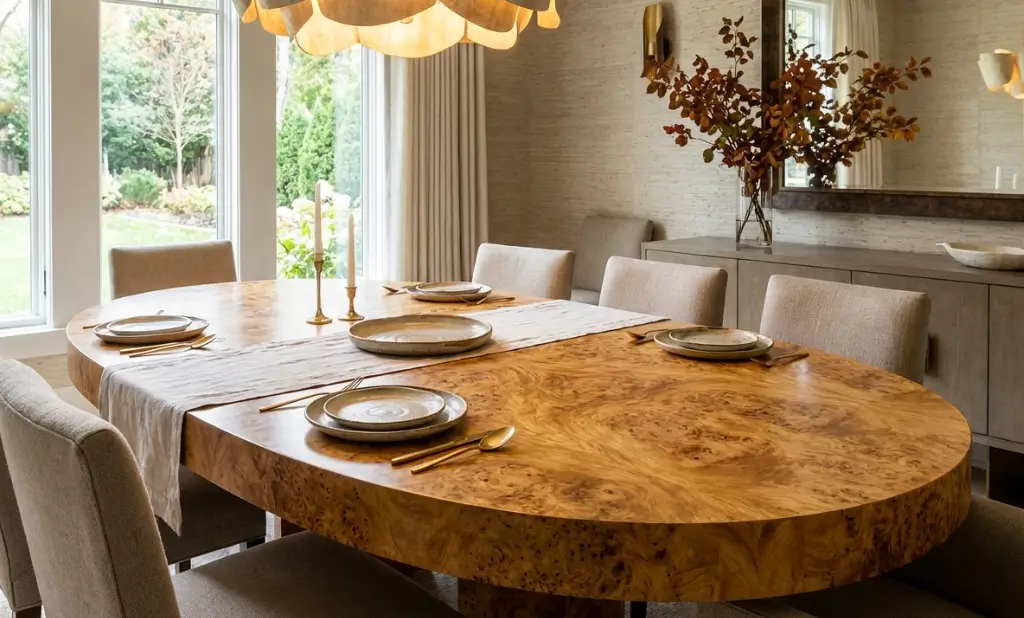
The allure of burl wood dining tables lies in their extraordinary beauty each piece tells a unique story through swirling, intricate grain patterns that simply can’t be replicated. These statement pieces have captivated interior designers and homeowners alike, transforming ordinary dining rooms into sophisticated spaces worthy of admiration.
In our comprehensive guide, we explore why these remarkable tables continue to be sought after, how to select the perfect one for your home, and our top recommendations for every style preference and budget.
Few furniture materials capture attention quite like burl wood. I still remember the first time I hosted a dinner party with my burl wood table guests spent more time admiring the intricate grain patterns than the food I’d spent hours preparing! The stunning grain patterns and wavy textures create a natural artwork that adds instant luxury and character to any dining room. Through our extensive testing and evaluation of dining tables, we’ve found that burl wood pieces consistently stand out as conversation starters while maintaining their appeal across changing design trends.
The history of burl wood in furniture design stretches back centuries, with notable appearances in Art Deco interiors of the 1920s, Mid-Century Modern designs of the 1950s-60s, and even ornate Baroque pieces from earlier periods. The Journal18 scholarly article on the nature of American veneer furniture (1790-1810), detailing burl formation as deformed tree growths and its aesthetic appeal in historical furniture design offers fascinating insights into how these unique wood formations have been prized for generations.
In 2026, we’re witnessing a significant resurgence in demand for burl wood dining tables as homeowners embrace organic, warm minimalist aesthetics. The movement away from mass-produced furniture toward pieces with natural character and uniqueness has placed these tables at the forefront of luxury interior design. Their ability to blend vintage elegance with contemporary sensibilities makes them particularly versatile for today’s eclectic home styles.
Burl wood derives its distinctive appearance from abnormal tree growths called burls woody outgrowths where the grain grows in chaotic, swirled patterns. These formations occur in response to stress or injury to the tree, creating densely packed, wildly figured wood that looks almost marble-like when sliced and polished. No two burl sections are identical, ensuring each table possesses its own fingerprint of nature.
The most coveted burl wood varieties for dining tables include Mappa (from poplar trees), olive burl, and walnut burl, each offering different color profiles and pattern densities. Mappa burl tends toward golden honey tones with dramatic figuring, olive burl presents rich amber to chocolate coloration, while walnut burl delivers deep, sophisticated browns. Our design team particularly appreciates how these materials create depth and visual interest even in minimalist dining spaces.
What makes burl wood dining tables so versatile is their ability to pair beautifully with various base materials. In our evaluations, we’ve seen striking combinations with brass bases for a glamorous look, sleek chrome or stainless steel for contemporary settings, and blackened metal for industrial-inspired spaces. This adaptability allows burl tables to transition seamlessly between vintage-inspired rooms and ultra-modern interiors, making them a truly timeless investment. The Incollect article on early colonial furniture at the Metropolitan Museum of Art, highlighting the use of richly figured burl wood veneering for striking surfaces in 17th-18th century pieces demonstrates the enduring appeal of this material.
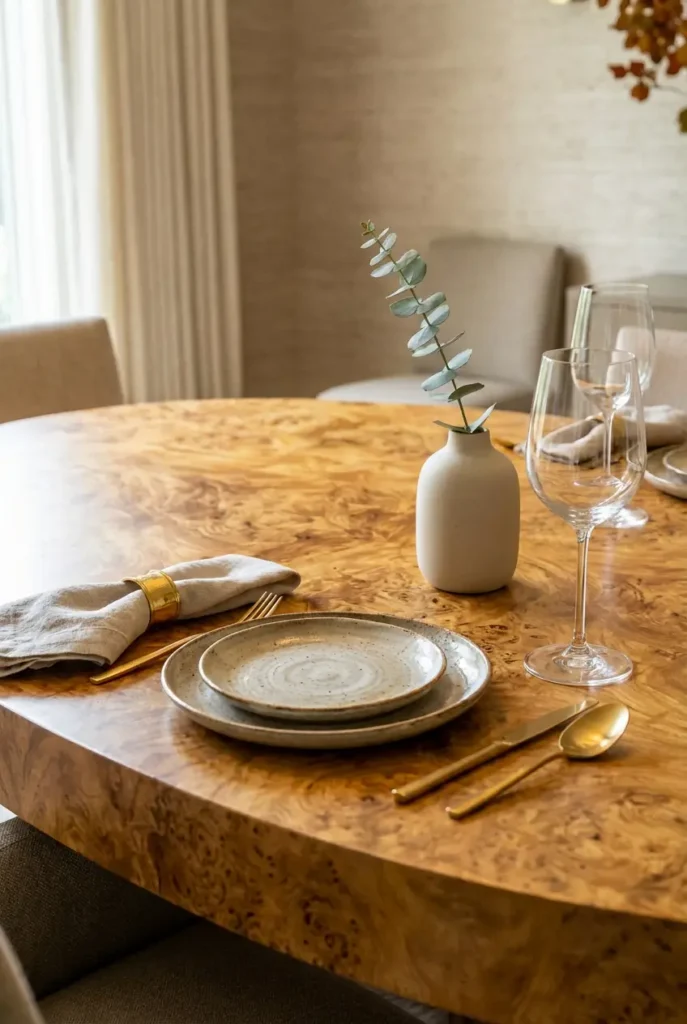
Before falling in love with a particular burl wood table, careful measurement is essential. For comfortable dining, allocate approximately 24 inches of table width per person. A standard 72-inch rectangular table comfortably seats 6-8 people, while larger gatherings might require 84-96 inches in length. In our experience testing various dining configurations, extendable tables with leaves offer valuable flexibility for homes that frequently host gatherings of different sizes.
Consider your dining room’s proportions ideally, maintain at least 36 inches of clearance between the table edge and walls or other furniture pieces to allow for comfortable chair movement and circulation. Round burl tables work beautifully in square rooms and promote more intimate conversation, while rectangular designs maximize seating in longer, narrower spaces.
Burl wood dining tables span diverse design eras and aesthetics. Vintage-inspired options include Regency-style tables with elegant tapered legs, glamorous Art Deco pieces with bold geometric bases, and Mid-Century designs featuring clean lines and organic shapes. For more contemporary spaces, minimalist parsons-style tables showcase the burl veneer as the star, while designs with rounded, sculptural legs offer a modern organic feel.
When selecting your burl wood dining table, consider its relationship with your existing furniture. Our design experts recommend identifying whether your overall aesthetic leans toward vintage luxury, contemporary minimalism, or eclectic mixing. This helps narrow your options and ensures your investment piece harmonizes with your design vision rather than competing with it.
Most modern burl wood dining tables feature high-quality veneer over engineered wood rather than solid burl (which would be prohibitively expensive and potentially unstable). This construction method actually provides superior stability while showcasing the beauty of the burl patterns. When examining finishes, look for tables with either high-gloss lacquer for a glamorous, reflective surface or satin/matte finishes for a more subtle, contemporary appearance.
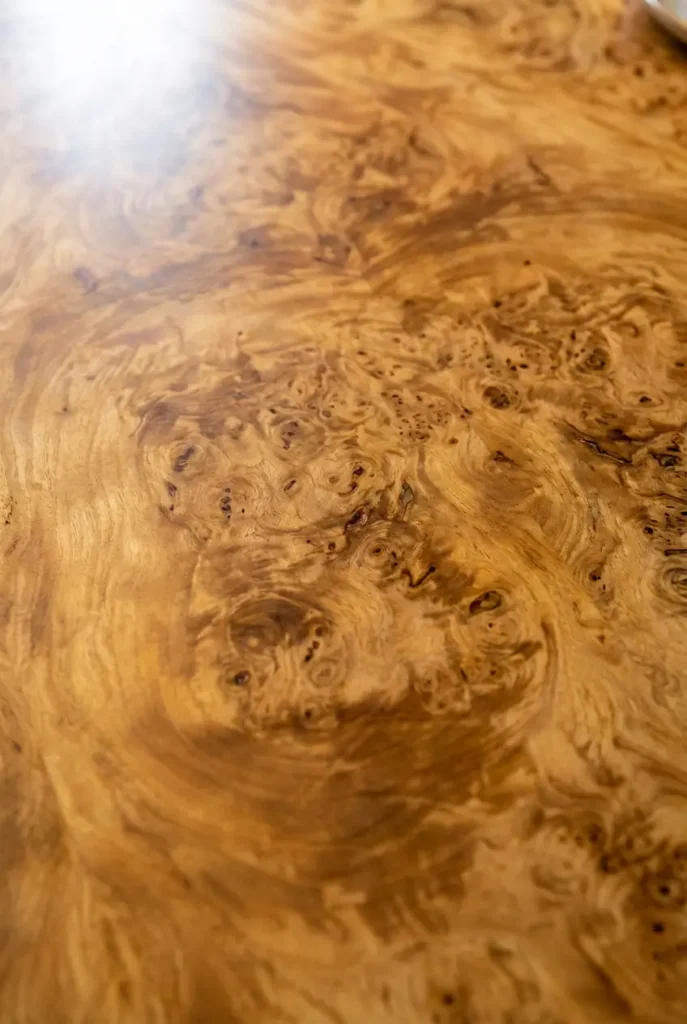
In our testing, we’ve found that properly sealed burl wood tables offer reasonable durability for daily use, though they do require more careful handling than some other materials. Many manufacturers now offer protective clear coats that resist minor spills and marks without diminishing the wood’s natural beauty. Before purchasing, we recommend inquiring specifically about the table’s finish and its maintenance requirements.
Burl wood dining tables span a wide price range depending on size, construction quality, and brand prestige. New production tables from mainstream retailers typically start around $999-1,500 for smaller or simpler designs. Mid-range options from design-focused brands like CB2, West Elm, or Crate & Barrel generally range from $1,500-3,000, offering excellent value with thoughtful design details.
High-end designer pieces from names like Jonathan Adler, Mitchell Gold + Bob Williams, or Bernhardt command $3,000-8,000, featuring premium construction, exceptional veneers, and distinctive bases. For collectors, vintage and antique burl wood tables particularly signed pieces from renowned designers like Milo Baughman or Karl Springer can range from $5,000 to well over $15,000 depending on provenance and condition.
When evaluating burl wood dining tables, remember that natural variations in pattern and color are part of their charm no two tables will look identical. Many better-quality tables are imported from furniture manufacturing centers in Italy, Vietnam, or China, so delivery timeframes may extend to 8-12 weeks for made-to-order pieces. Our team appreciates retailers that offer AR preview tools or sample kits to help visualize how specific burl patterns will look in your space.
Pay attention to the table’s substrate (what’s beneath the veneer) quality engineered wood cores provide better stability and longevity than particleboard bases. We also recommend examining edge treatments carefully, as well-crafted tables feature seamless veneer wrapping around edges rather than obvious transition lines.
Quality burl wood dining tables are available through several channels. Online retailers like Perigold, 1stDibs, and Chairish offer extensive selections with detailed photography to examine grain patterns. Traditional furniture retailers with strong online presences Room & Board, Crate & Barrel, CB2 increasingly feature burl options with consistent quality and good customer service.
For vintage enthusiasts, specialized marketplaces like 1stDibs, Chairish, and EBTH regularly feature authenticated pieces from notable design periods. Custom studios and local furniture makers can create bespoke burl wood tables to exact specifications, though these typically command premium prices. When purchasing online, carefully review the return policy and delivery conditions, as these substantial pieces often require white-glove delivery services.
After evaluating dozens of burl wood dining tables for quality, design, and value, our editorial team has selected standout options across different price points and styles:
This accessible entry into burl wood dining delivers impressive style for its $999 price point. Featuring dark Mappa burl veneer with dramatic figuring, the parsons-style design seats 8 comfortably with a clean, contemporary silhouette. Our team appreciates the table’s substantial feel and the excellent consistency of the veneer application. The straightforward design pairs easily with diverse chair styles, from upholstered classics to modern acrylic options.
While lacking the heirloom quality of higher-end pieces, the Aqua Virgo represents an excellent opportunity to bring burl wood’s luxury into more modest budgets. Note that this table requires more careful maintenance than some pricier options with more durable finishes.
For those seeking a high-impact contemporary statement, the Bond Dining Table showcases honey-toned Mappa burl veneer atop a sculptural polished nickel base. The combination creates a sophisticated balance between organic warmth and precision-crafted geometry. An ingenious integrated leaf system extends seating from 8 to 10 guests without disrupting the design’s clean lines.
In our evaluation, we found the Bond’s construction exceptionally solid, with impeccable veneer matching that highlights the dramatic burl patterns. The combination of materials cool metal with warm wood creates versatility for pairing with various dining chairs. This investment piece merges the traditional luxury of burl with thoroughly modern sensibilities.
No discussion of burl wood dining tables would be complete without acknowledging Milo Baughman’s influential designs from the 1970s-80s. These parsons-style tables with chrome legs and richly figured burl tops represent the pinnacle of Mid-Century Modern sophistication. Available through vintage dealers and occasionally at auction, authenticated Baughman tables feature exceptional craftsmanship and have proven their longevity over decades.
Most Baughman designs include expandable leaves, making them as practical as they are beautiful. Our vintage furniture specialists note that while these tables command premium prices ($4,000-8,000 depending on condition), they typically hold their value exceptionally well, making them both design statements and investment pieces.
For dining spaces that call for softer lines, the Julie Dining Table presents a 54-inch round top in luminous Mappa Golden Oak burl veneer. The pedestal base in matte black creates dramatic contrast while maximizing legroom for diners. What sets this table apart is the workshop’s willingness to customize dimensions and finish details for a truly personalized piece.
Through our hands-on assessment, we found the Julie’s construction exceptionally solid, with a pleasingly tactile satin finish that showcases the burl’s natural beauty while offering practical protection. The round format encourages conversation and works beautifully in square rooms or open-concept spaces where a rectangular table might feel imposing.
For collectors and connoisseurs, nothing compares to the character of genuine antique burl wood dining tables. Marketplace platforms like 1stDibs and specialty dealers like Lucca Antiques occasionally offer exceptional pieces from Rococo, Streamline Deco, and other significant design periods. These tables, often European in origin, feature hand-crafted details and patina that cannot be replicated in modern production.
When evaluating antique burl tables, our experts recommend working with reputable dealers who provide detailed condition reports and provenance information. While these pieces represent significant investments (often $10,000+), they bring extraordinary craftsmanship and historical significance to discerning interiors.
| Table Model | Price | Size | Style | Pros | Cons |
|---|---|---|---|---|---|
| Aqua Virgo (CB2) | $999 | 72″L x 36″W | Contemporary | Affordable, dramatic grain, seats 8 | Less durable finish, no expansion option |
| Bond (Jonathan Adler) | $3,995 | 84-104″L x 42″W | Luxury Modern | Expandable, premium materials, striking base | High price point, heavy (delivery challenges) |
| Milo Baughman Vintage | $4,000-8,000 | Varies (typically 72-96″) | Mid-Century Modern | Investment value, iconic design, proven durability | Limited availability, may need restoration |
| Julie (Oyster Creek) | $2,800 | 54″ diameter | Transitional | Custom options, space-efficient, elegant pedestal | Limited seating (4-6), no expansion option |
| Antique European | $10,000+ | Varies | Period-specific | Unique history, exceptional craftsmanship | Requires specialized care, potential fragility |
Proper maintenance ensures your burl wood dining table remains beautiful for generations. For daily care, dust with a soft microfiber cloth, moving with the grain to prevent scratching the surface. Immediately wipe away any spills, as even water can potentially damage the finish if left standing. Always use trivets or hot pads under warm dishes, as heat can cause the finish to cloud or bubble.
For deeper cleaning, our team recommends following practical tips on how to clean and care for your wood dining table with products specifically formulated for fine wood furniture. Avoid all-purpose cleaners containing ammonia or silicone, which can damage finishes over time. Instead, use a slightly damp cloth for spot cleaning, followed immediately by a dry cloth to remove any moisture.
Burl wood, like all natural materials, responds to its environment. Maintain consistent humidity levels (30-50%) in your dining area to prevent the veneer from cracking or lifting. Use coasters under beverages, place mats under plates, and consider a custom-cut piece of glass for added protection during frequent use. Seasonal changes may require minor adjustments our furniture specialists note that wood naturally expands and contracts with humidity fluctuations.
For vintage or antique burl tables showing wear, professional refinishing by a specialist in veneer restoration can breathe new life into these treasured pieces. Be extremely cautious about DIY repairs, as burl veneer requires specific techniques different from solid wood maintenance. When properly cared for, a quality burl wood dining table will develop a beautiful patina while maintaining its structural integrity for decades.
Before making your final decision on a burl wood dining table, consider this quick checklist:
If you’re drawn to unique wood character but aren’t completely sold on burl, you might also want to explore a look at stunning mango wood dining tables if you love unique wood grains for another distinctive option. For those needing flexibility with their dining space, consider top options for expandable wood dining tables that fit every occasion.
Ready to transform your dining room with a stunning burl wood centerpiece? Shop our top picks through the links above and bring home a table that combines natural artistry with functional elegance a true investment in your home’s beauty and your family’s gathering space for years to come.