Address
304 North Cardinal
St. Dorchester Center, MA 02124
Work Hours
Monday to Friday: 7AM - 7PM
Weekend: 10AM - 5PM
Address
304 North Cardinal
St. Dorchester Center, MA 02124
Work Hours
Monday to Friday: 7AM - 7PM
Weekend: 10AM - 5PM


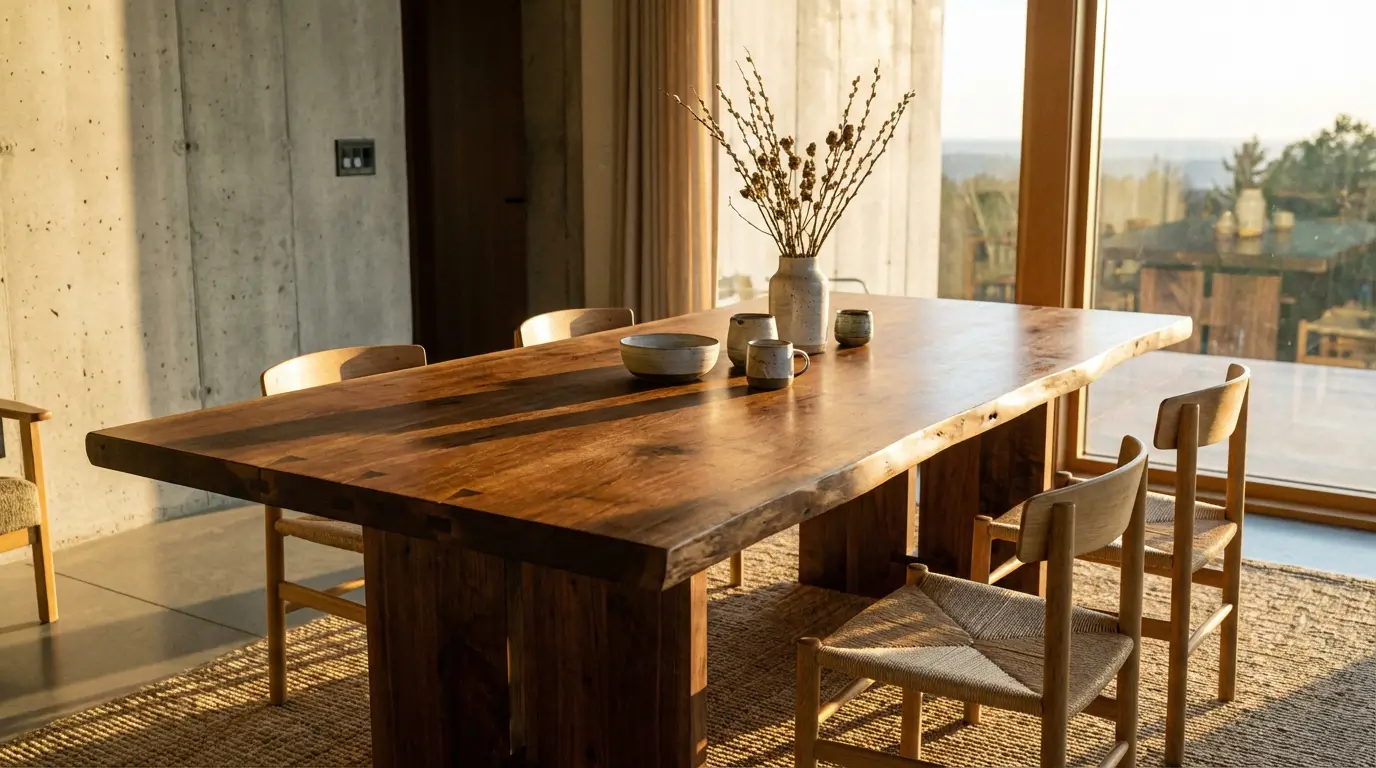
Let me be honest with you for a second. When I first started writing about home decor, I thought a dining table was just… a dining table. Four legs, a flat surface, somewhere to put your plate. It wasn’t until I watched a friend inherit her grandmother’s solid oak table still gleaming, still solid after 60 years of Sunday dinners, homework sessions, and holiday feasts that I truly understood what the benefits of owning a wood dining table actually mean in practice.

It’s not just furniture. It’s the centerpiece of your home’s story.
This guide breaks down everything you need to know the durability, the aesthetics, the sustainability, the maintenance realities, and how wood stacks up against glass and other materials so you can make a genuinely informed decision rather than just buying whatever looks good in a showroom.
Before we dive into the details, here’s the honest summary: wood dining tables earn their reputation because they deliver on every dimension that matters longevity, beauty, warmth, repairability, and environmental responsibility. No other material checks all five boxes simultaneously.
But let’s go deeper than that.
The single most compelling benefit of owning a wood dining table is how long it lasts when treated with even basic care.
Hardwoods like oak, walnut, maple, and acacia are genuinely tough. They resist everyday wear the knocks from dinner plates, the drag of chair legs, the occasional dropped fork in a way that glass shatters under and metal dents from. A quality solid wood dining table can absorb the chaos of family life without falling apart.
But here’s what separates wood from every other material: it can be restored. Got a deep scratch after moving furniture? Sand it down and refinish it. Water rings from years of coffee mugs? A light re-oiling can make them disappear. A glass table that chips or a metal table that rusts is effectively damaged forever. A wood table that shows wear is just waiting to be renewed.
This renewability is what gives solid wood dining tables their legendary longevity. Many high-quality wood tables don’t just last decades they genuinely outlive their owners and pass to the next generation in better condition than most modern furniture survives its first five years.
Here’s a question interior designers get asked constantly: Why choose a wood dining table over something more modern-looking?
The answer isn’t sentimental it’s sensory.
Wood brings warmth into a room in a way that’s almost impossible to replicate artificially. The natural grain patterns, the subtle variation in color, the way light plays across a polished surface these qualities create a visual depth that manufactured materials simply can’t match. Every solid wood table is, in the truest sense, unique. No two pieces of oak or walnut have exactly the same grain pattern. You’re not buying a product; you’re acquiring a piece of a tree that grew for decades.
This is why wood dining tables work across virtually every interior style:
Glass tables can look elegant. Marble can look luxurious. But wood feels like home and that’s not a small thing when you’re talking about the room where your family eats together every day.

This is a distinction that furniture retailers don’t always make loudly enough, so let’s be clear about it.
Solid wood means the tabletop is cut directly from timber what you see is what the wood is, all the way through. Engineered wood (MDF, plywood, particle board, or wood veneer over composite) uses wood fibers or thin wood sheets bonded with adhesives over a manufactured core.
Both can look beautiful in a showroom. The difference becomes obvious over time.
| Solid Wood | Engineered Wood | |
|---|---|---|
| Longevity | Decades to generations | 5–15 years typically |
| Refinishing | Yes, multiple times | No surface damage is permanent |
| Moisture resistance | Good with proper care | Poor swells and warps easily |
| Weight | Heavy (a sign of quality) | Lighter but less durable |
| Aging | Improves with character | Deteriorates over time |
| Environmental impact | Lower if sustainably sourced | Higher due to adhesives and composites |
The solid wood dining table advantages in longevity alone justify the higher upfront cost in most cases. Think of it this way: a $400 engineered wood table that needs replacing every 8 years costs more over 25 years than a $800 solid wood table that lasts the same period refinished twice.
Pro tip: Always check the product specifications carefully. Terms like “acacia wood veneer” or “MDF with wood finish” are not the same as “solid acacia wood.” Tap the table solid wood has a dull, dense thud; hollow engineered wood sounds lighter and more resonant.
Environmental consciousness isn’t a trend anymore it’s a genuine shift in how people think about the things they bring into their homes. And wood dining tables, when sourced responsibly, are one of the most eco-friendly furniture choices you can make.
Here’s why:
Let’s be real: one of the hesitations people have about wood dining tables is maintenance. “Won’t it scratch easily? Won’t it warp if I don’t baby it?” These are fair concerns and the honest answer is that yes, wood requires some care. But far less than most people assume, and far less than the ongoing hassle of keeping a glass table looking clean.
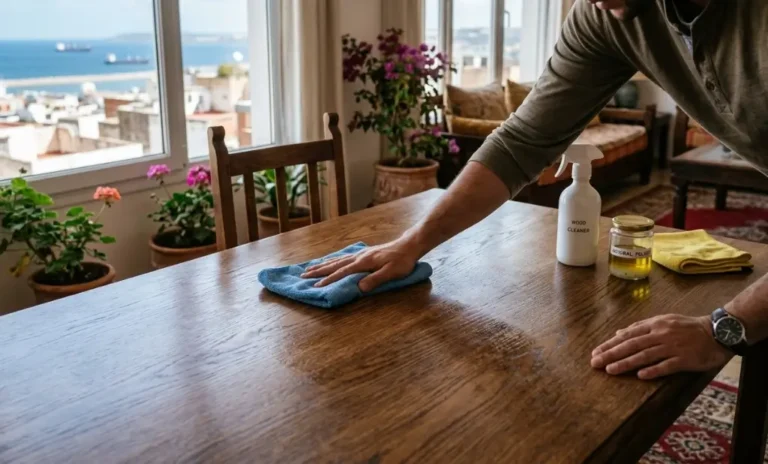
Here’s the practical maintenance routine that keeps a wood dining table looking its best for years:
The golden rules:
This debate comes up constantly, so let’s settle it properly.
Glass dining tables have genuine appeal they create a sense of openness in smaller rooms, look undeniably sleek, and suit ultra-modern interiors beautifully. There’s a reason they’re popular. But when you put them head-to-head with wood across the factors that matter for daily living, the picture gets complicated quickly.
| Factor | Wood Dining Table | Glass Dining Table |
|---|---|---|
| Durability | Excellent resists impacts and scratches | Fragile chips and shatters under impact |
| Maintenance | Moderate periodic polishing | High fingerprints and smudges constantly visible |
| Warmth & aesthetic | Warm, inviting, timeless | Cool, sleek, modern |
| Child-friendliness | High no sharp edges if well-finished | Lower breakage risk, sharper edges |
| Repairability | Yes scratches can be fixed | No chips and cracks are permanent |
| Longevity | Generations with care | Vulnerable to accidental damage |
| Resale value | Holds or increases (antiques) | Depreciates quickly |
| Versatility | Works in any style home | Best suited to contemporary/modern spaces |
Glass tables are a style choice. Wood tables are a lifestyle choice. If you have children, frequently entertain, or simply want furniture that ages gracefully rather than showing every fingerprint and scratch, wood wins decisively.
If marble or faux marble has caught your eye as a middle ground, it’s worth knowing those options offer the cool elegance of stone with slightly better durability than glass but they still can’t be refinished, and they’re significantly heavier and more expensive to maintain than wood.
Ready to shop? Here’s what a knowledgeable buyer actually pays attention to beyond just how it looks in a product photo.
Wood species matters:
Construction quality signals:
Look for mortise-and-tenon joints or dowel construction rather than just glue and screws. Check that the tabletop is properly secured to the base with expansion hardware (which allows for natural wood movement with humidity changes). Inspect the finish it should feel smooth and even, with no rough patches, drips, or uneven coloring.
Finish types:
Size and seating guidance:
Allow 24 inches of table width per person for comfortable elbow room. Standard dining height is 28–30 inches check that your chairs suit the table height before purchasing. For rectangular tables, allow at least 36 inches of clearance around all sides for comfortable chair movement.
Sustainability credentials:
Ask specifically about FSC certification or equivalent. Reclaimed wood tables are an excellent option beautiful, characterful, and using timber that has already been harvested rather than requiring new felling.

Here’s the thing that price tags can’t capture: a quality wood dining table appreciates in meaning, if not always in monetary value.
Think about the scenes that play out around a dining table over the years birthday dinners, holiday gatherings, difficult conversations, homework struggles, celebrations large and small. The table witnesses all of it. And a solid wood table, with its grain deepening and its surface wearing in exactly the places hands have rested and plates have been set, carries that history visibly.
Antique solid wood dining tables regularly sell for more than their original purchase price. A mid-century walnut dining table from the 1960s in good condition can command thousands of dollars at auction. That simply doesn’t happen with glass, metal, or engineered wood.
Beyond monetary value, there’s the environmental calculus. Furniture that lasts 50 years instead of 10 means four fewer tables manufactured, shipped, and eventually sent to landfill. At a moment when sustainable consumption matters more than ever, choosing quality wood furniture is a genuinely meaningful decision.
The bottom line: The benefits of owning a wood dining table compound over time. The initial cost may be higher than alternatives, but the value practical, aesthetic, environmental, and emotional grows rather than diminishes with the years.
With basic care, a quality solid hardwood dining table should last 50 years or more and many antique examples are well over a century old and still functional. The key factors are wood species (harder woods last longer), construction quality, and maintenance consistency. Engineered wood tables, by contrast, typically show significant deterioration within 10–15 years.
Honestly, no less so than most people expect. Daily wiping with a damp cloth, occasional polishing, using coasters, and addressing spills promptly covers about 95% of the maintenance required. The main things to avoid are prolonged moisture exposure, direct heat without protection, and harsh chemical cleaners. Compared to the constant fingerprint-wiping that glass tables demand, wood is actually quite forgiving in daily use.
Yes, but the wood species and finish matter enormously. Acacia and teak are the best choices for outdoor use because their natural oils make them water-resistant. Any outdoor wood table should be sealed or oiled regularly, covered during extended periods of non-use, and brought under shelter or covered during harsh weather. UV exposure is the biggest threat to outdoor wood furniture a UV-protective finish extends life significantly.
Solid wood tables are cut directly from timber all the way through what you see is what the wood is. Veneer tables have a thin layer of real wood (sometimes just 1–3mm thick) over a composite or MDF core. Veneers can look identical to solid wood in photos, but they cannot be refinished, are more vulnerable to moisture damage, and have significantly shorter lifespans. Always read product specifications carefully and ask sellers to clarify if the listing is ambiguous.
For surface scratches on finished tables, rub a walnut meat along the scratch the natural oils help disguise the mark. For slightly deeper scratches, 0000-grade steel wool rubbed gently with the grain followed by furniture wax often works beautifully. Deeper gouges can be filled with color-matched wood filler or wax sticks available at hardware stores. For serious damage, a professional refinishing restores the table to essentially new condition something completely impossible with glass or engineered wood.
Both are excellent choices it really depends on your aesthetic preference and lifestyle. Oak is harder (more scratch-resistant), lighter in color, and generally more affordable. It suits farmhouse, traditional, and contemporary styles equally well. Walnut is softer but still very durable, darker and richer in tone, and has a more sophisticated, formal feel. It tends to suit modern and mid-century interiors particularly well. If you have young children or expect heavy daily use, oak’s extra hardness is a practical advantage.
Absolutely in fact, wood is arguably the best material for family dining tables. Unlike glass (breakage risk, sharp edges if chipped), metal (cold, can dent and show marks prominently), or marble (very heavy, porous and stain-prone), wood is warm, safe, and forgiving. Surface scratches and minor damage can be repaired. A few dents and marks from years of family meals actually add character to a solid wood table rather than ruining it.
Always use placemats or a tablecloth for meals, coasters for all drinks, and trivets for hot dishes. Wipe spills immediately with a dry cloth don’t let liquid pool on the surface. For tables that see heavy use, a polyurethane finish offers excellent moisture protection. For oil-finished tables, regular re-oiling (every 6–12 months) maintains the wood’s natural moisture barrier. In very dry climates, a room humidifier helps prevent the wood from drying and cracking over time.
FSC stands for Forest Stewardship Council, an international organization that certifies forests managed according to strict environmental, social, and economic standards. When a wood product carries an FSC certification, it means the timber was harvested in a way that protects biodiversity, maintains forest health, and respects the rights of local communities. Buying FSC-certified wood furniture ensures your purchase supports responsible forestry rather than contributing to deforestation. It’s the most reliable environmental credential to look for when shopping for wood furniture.
This is as much about your room layout and social preferences as it is about style. Rectangular tables seat more people, work well in longer rooms, and make it easier to add leaves for expansion. Round tables encourage more egalitarian conversation (no “head of the table”), work beautifully in square rooms, and are generally better for smaller spaces since they have no corners to navigate around. If you frequently host large gatherings, a rectangular expandable table offers the best of both worlds.
Investing in a wood dining table is one of the most rewarding decisions you can make for your home. Choose thoughtfully, care for it consistently, and it will reward you with decades possibly generations of beauty and use.