Address
304 North Cardinal
St. Dorchester Center, MA 02124
Work Hours
Monday to Friday: 7AM - 7PM
Weekend: 10AM - 5PM
Address
304 North Cardinal
St. Dorchester Center, MA 02124
Work Hours
Monday to Friday: 7AM - 7PM
Weekend: 10AM - 5PM


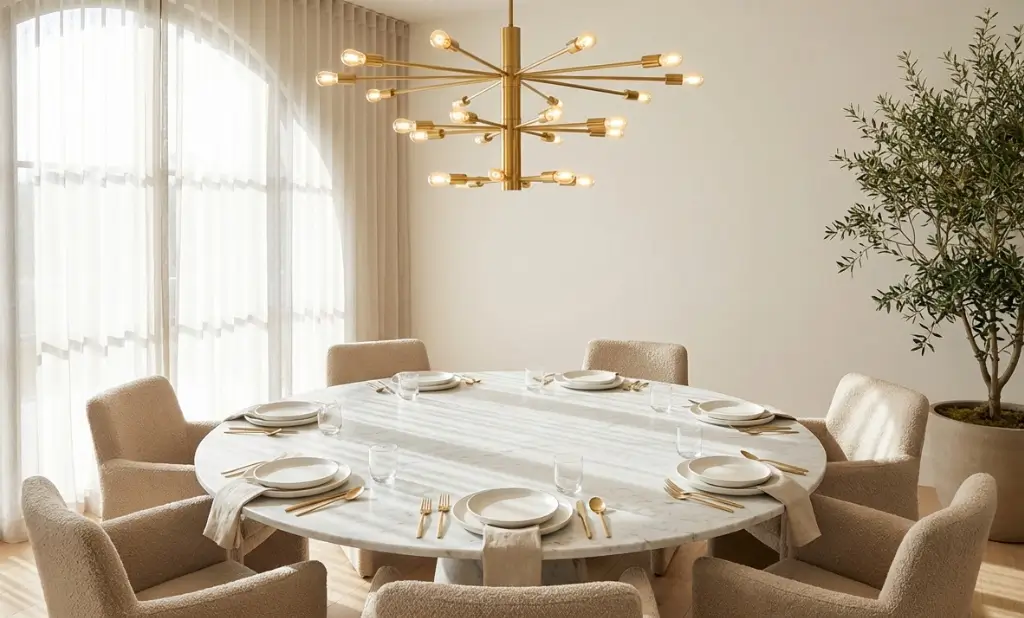
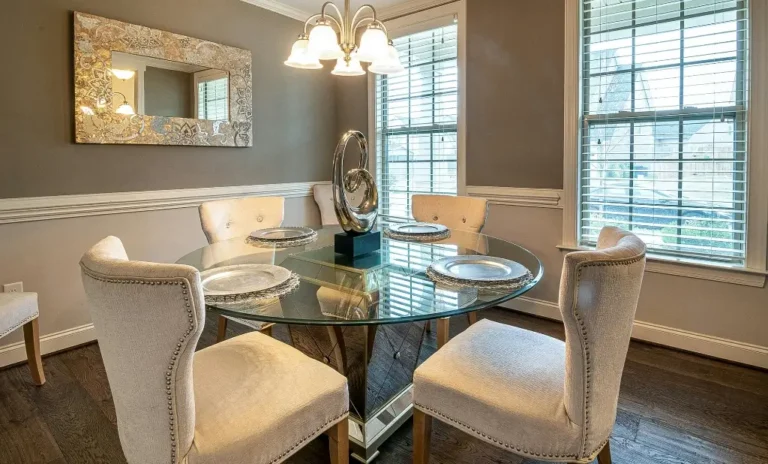
The enduring allure of marble has captivated interior designers and homeowners for centuries. From grand palatial halls to modern apartments, marble’s natural beauty creates an immediate sense of refined luxury and sophistication. I’ve witnessed countless times how a round marble dining table instantly transforms even the most ordinary space into something truly extraordinary. At the heart of many stunning dining spaces stands the round marble dining table a perfect marriage of timeless material and space-efficient design.
In this comprehensive guide, we’ll explore why round marble dining tables continue to be a sought-after centerpiece, offering both practical benefits and aesthetic appeal that few other dining tables can match. Whether you’re furnishing your first home or upgrading your dining space, we’ll cover everything from style considerations and sizing guidelines to maintenance tips and shopping recommendations.
Having spent years helping our customers find the perfect dining solutions, we’ve gathered extensive insights on what makes round marble dining tables such versatile investments. Join us as we delve into the world of these elegant furnishings and discover why they might be the perfect addition to your home.
The decision to invest in a round marble dining table extends far beyond simple aesthetics. These tables offer a unique combination of practical benefits and visual appeal that make them ideal for many modern homes.

One of the most compelling reasons to choose a round table is its efficient use of space. In our experience working with homeowners of various living situations, round tables consistently prove to be excellent solutions for smaller dining areas.
Unlike rectangular or square tables with protruding corners, round tables create a smaller footprint while still accommodating the same number of diners. This makes them particularly ideal for apartments, compact dining rooms, or multi-purpose spaces where every square foot counts.
The absence of corners also means improved traffic flow around the table. Family members and guests can move more freely without navigating sharp edges a subtle but significant advantage in tighter spaces. For urban dwellers or those with open-concept living areas, this space efficiency can make a substantial difference in how comfortable a room feels.
Marble’s natural beauty is undeniable. Each piece tells a geological story through its distinctive veining and color variations, making every marble table unique. This natural artistry is one reason why designers consistently feature marble in Architectural Digest’s feature on marble-topped tables in iconic interiors.
What makes round marble tables particularly versatile is their ability to complement virtually any design style:
This versatility is further enhanced by the wide range of marble colors available, from classic white Carrara and dramatic black Marquina to warm beige and even pink varieties. Understanding the geological properties and formation process of marble helps explain why each piece offers such distinctive beauty.
Beyond aesthetics and space considerations, round tables create inherently social dining experiences. The circular shape naturally facilitates conversation by allowing all diners to see and engage with one another equally. There’s no “head of the table” at a round table everyone has the same position and sightlines.
This democratic seating arrangement makes round tables particularly conducive to intimate gatherings, family meals, and dinner parties where conversation is as important as the food served. We’ve noticed that customers who entertain frequently often prefer round tables precisely for this communal quality.
Additionally, round tables work beautifully in both formal and casual settings. They can be dressed up with fine linens and elegant place settings for special occasions or kept casual for everyday meals. This dual functionality makes them practical investments for homes where the dining area serves multiple purposes.
A round marble dining table can be the perfect centerpiece in various design aesthetics, from sleek contemporary spaces to eclectic bohemian environments. Let’s explore how to integrate these tables into different interior styles.
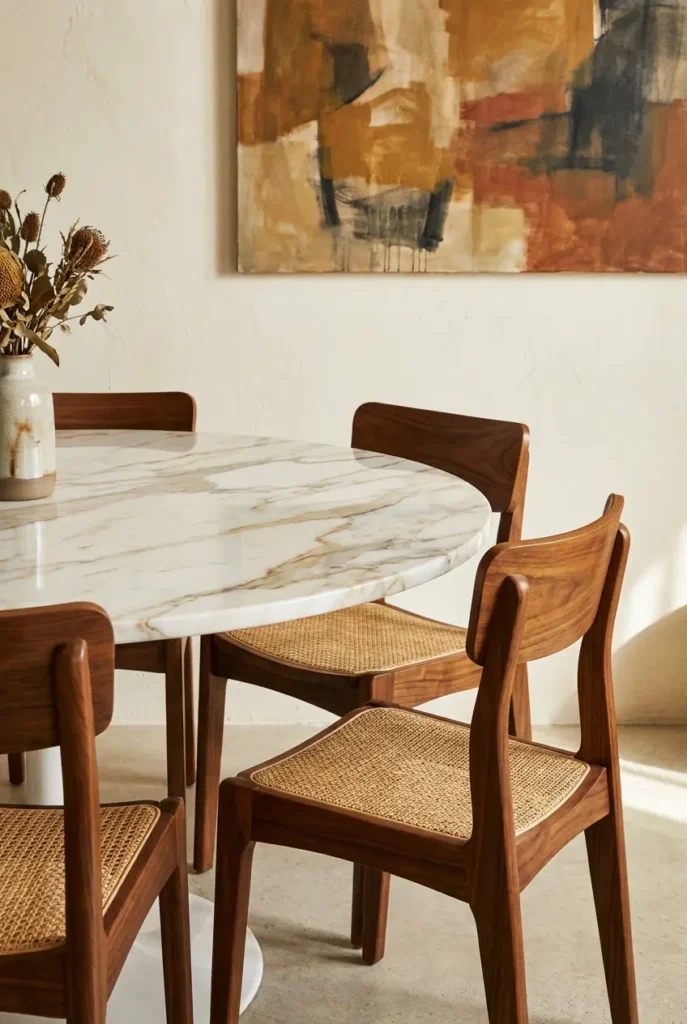
In contemporary settings, round marble tables provide a perfect balance of organic texture and clean lines. When styling a modern space around your round marble table, consider these approaches:
The juxtaposition of natural marble with the warm woods and organic shapes of mid-century design creates a compelling visual narrative. For this style pairing:
The refined elegance of marble creates a fascinating counterpoint to raw industrial elements. To achieve this balanced contrast:
Scandinavian interiors celebrate light, simplicity, and natural materials a perfect environment for a round marble dining table. For this clean, airy aesthetic:
Beyond these primary design approaches, round marble dining tables adapt beautifully to numerous other styles:
When choosing how to choose the right marble dining table for your space, consider both your current decor and how adaptable the table will be if your style evolves over time.
Understanding the materials and construction methods used in round marble dining tables helps ensure you’re making a wise investment that will stand the test of time.
When shopping for a marble dining table, you’ll encounter both genuine marble and synthetic alternatives. Each has distinct characteristics worth considering:
Genuine Marble: True marble is a metamorphic rock formed when limestone undergoes intense pressure and heat. Quality indicators include:
Natural marble requires more maintenance but offers unmatched authenticity and develops a beautiful patina over time. In our showrooms, we’ve noticed that customers who choose genuine marble often comment on the material’s timeless quality and connection to nature.
Synthetic Alternatives: Modern manufacturing has produced impressive marble-look options including:
These alternatives typically offer greater stain resistance and durability with less maintenance. For households with young children or frequent entertaining, these practical benefits may outweigh the desire for natural stone.
A common mistake to avoid is assuming all white stone tables are marble. Some may actually be quartz, alabaster, or other materials with different properties and care requirements.
The base of your round marble dining table significantly impacts both stability and style. Common base configurations include:
Pedestal Base: A single central support column that provides maximum legroom and unobstructed seating. For marble tables, which can be quite heavy, look for pedestal bases with:
Four-Leg Design: Traditional four-point support offers excellent stability but may limit seating positions. In quality construction, look for:
Double Pedestal: Larger round tables often feature dual support columns for added stability. This design provides good legroom while safely supporting wider marble tops.
Trestle Base: Less common in round tables but occasionally seen, trestle bases provide stable support through a central beam with extending feet.
The visual weight of the base should complement the tabletop too delicate a base can make a heavy marble top appear unstable, while an overly bulky base might overwhelm the elegant stone surface.
Selecting the right size for your round marble dining table requires careful consideration of both your space constraints and seating needs.
Round marble dining tables typically come in several standard diameters, each accommodating different numbers of diners:
Regardless of diameter, standard dining table height typically measures 29-30 inches from floor to tabletop, which provides optimal comfort for most diners when paired with standard dining chairs (18-19 inches from floor to seat).
When determining the appropriate table size for your space, follow these guidelines:
To visualize the table’s footprint before purchasing, create a paper template or mark the dimensions with painter’s tape on your floor. Include the space needed for pulled-out chairs to ensure the arrangement works in practice, not just in theory.
For flexible dining needs, consider expandable options with removable leaves that transform round tables into oval configurations for larger gatherings while maintaining the space efficiency of a round table for everyday use.
The color and finish of your round marble dining table significantly influence both its visual impact and practical performance. Let’s explore the most popular options and their distinctive characteristics.
White marble varieties like Carrara, Calacatta, and Statuario remain the most sought-after options, and for good reason:
Black marble varieties such as Nero Marquina and Black Levanto create bold, dramatic focal points:
For those seeking something truly distinctive, colored marbles offer compelling alternatives:
These more unusual marble colors often require thoughtful color coordination with surrounding décor. Rather than matching exactly, look for complementary tones that enhance the stone’s natural beauty.
When working with colored marbles, we often recommend keeping other elements in the dining space relatively neutral to allow the table’s unique character to take center stage.
The surface finish of your marble table dramatically affects both its appearance and performance:
Polished Finish: The most traditional option, featuring a high-gloss, mirror-like surface that:
Honed Finish: A matte or satin surface that:
Leathered/Textured Finish: An increasingly popular option with a subtle texture that:
In our experience helping customers select finishes, lifestyle considerations should guide this choice as much as aesthetics. Active households with children may benefit from honed or leathered finishes that forgive daily wear more gracefully than high-polish options.
Beyond basic design and material considerations, specific functional features can dramatically enhance the versatility and practicality of your round marble dining table.
For those who entertain frequently or have varying seating needs, expandable round marble tables offer excellent flexibility:
When evaluating expandable marble tables, pay particular attention to:
Expandable options typically command higher prices but offer tremendous value for those with fluctuating seating needs or limited dining space that must occasionally accommodate larger gatherings.
While expandable tables offer flexibility, fixed-size round marble dining tables provide several distinct advantages:
Fixed-size tables are ideal for households with consistent dining needs or spaces dedicated solely to dining. They’re also preferable when the marble selected features distinctive veining patterns that would be interrupted by expansion seams.
In our design practice, we’ve found that many customers initially request expandable options but ultimately choose fixed tables when they realistically assess how frequently they entertain larger groups versus their daily needs.
Round marble dining tables represent significant investments that vary widely in price based on size, marble quality, construction, and brand positioning. Understanding what drives these price differences helps consumers make informed decisions.
Budget-friendly round marble dining tables typically range from $400-$800 and offer accessible luxury with certain trade-offs:
At this price point, expect to find:
These tables provide the aesthetic appeal of marble while remaining financially accessible. They’re particularly suitable for first-time homeowners, temporary living situations, or dining spaces that see lighter use.
To maximize value in this category, look for solid construction in the base, even if the tabletop uses composite materials or thinner marble surfaces. A sturdy foundation ensures the table remains stable and functional even if the surface shows wear more quickly than premium options.
The sweet spot for many consumers falls in the $800-$1,500 range, where significant quality improvements become apparent:
This price category typically offers:
In our experience, this range represents the best value for most households, balancing quality, appearance, and longevity. Tables in this category often feature genuine marble with protective sealing treatments already applied, simplifying maintenance.
Many reputable furniture retailers offer tables in this category, making them readily available for in-person evaluation before purchase an important consideration given the natural variation in marble.
High-end marble dining tables starting at $1,500 and reaching well into five figures offer exceptional quality and distinctive design:
Investment pieces in this category feature:
These tables often become family heirlooms, maintaining their beauty and value over decades. The investment delivers not only superior materials but also exceptional engineering better stabilization to prevent warping, more sophisticated attachment methods, and bases designed specifically for the weight and properties of substantial marble tops.
For those with the means, these tables offer incomparable presence and become the centerpiece around which entire dining room designs evolve. You’ll find excellent options among our top picks for the best round marble dining tables across all price points.
Finding the perfect round marble dining table involves knowing where to look. Various retailers offer different advantages in terms of selection, quality, and customer experience.

Large furniture retailers and department stores provide accessible options with several consumer benefits:
National chains like Crate & Barrel, West Elm, and Pottery Barn: These retailers offer curated selections of round marble dining tables with consistent quality standards and readily available stock. Their widespread physical locations allow customers to examine tables in person before purchasing.
Online marketplaces including Wayfair, Amazon, and Overstock: These platforms provide extensive options across all price points with the convenience of home delivery. User reviews and detailed specifications help compensate for the inability to see items in person.
When shopping with major retailers, consider these factors:
In our experience, large retailers excel at providing mid-range options with good value and convenient delivery logistics, though selection may be more limited to current trends rather than unique pieces.
For those seeking exceptional quality or unique designs, specialized retailers offer distinct advantages:
High-end furniture showrooms: Establishments like Design Within Reach, Roche Bobois, or Restoration Hardware showcase premium marble dining tables with expert sales consultants who can explain material differences and construction details.
Local designer furniture boutiques: Independent shops often carry carefully selected marble tables, including pieces from smaller manufacturers or artisans not represented in chain stores. These venues frequently offer more personalized service and design guidance.
Custom furniture makers: For truly bespoke options, working directly with furniture designers or fabricators allows complete customization of dimensions, materials, and design details.
Vintage and antique dealers: Sources for unique marble tables with history and character not found in new production. Platforms like 1stDibs aggregate offerings from dealers nationwide.
Specialized retailers typically provide more expertise and unique selections but may require longer lead times, particularly for custom or imported pieces. The investment in their higher-quality offerings often pays dividends in terms of longevity and timeless design.
Once you’ve selected your round marble dining table, thoughtful styling transforms it from a beautiful furniture piece into the heart of a cohesive dining environment.
Chair selection significantly impacts both comfort and aesthetics in your dining space:
Metal frame chairs create contemporary pairings with marble tables. Consider:
Wood chairs bring warmth and natural texture to balance marble’s coolness:
Upholstered options add comfort and color opportunities:
In our design experience, mixing chair styles creates dynamic, collected-over-time dining arrangements. Consider using different chairs at the heads of oval expanded tables or incorporating benches on one side of rectangular configurations when your round table expands.
Thoughtfully chosen accessories enhance your marble table’s beauty while protecting its surface:
Centerpiece strategies:
Table coverings:
Protective considerations:
When styling your marble table, embrace its natural beauty by allowing some of the surface to remain visible even when decorated. The stone itself is a design element worth showcasing.
Creating a cohesive dining area involves thoughtful coordination with other elements in the space:
Sideboards and buffets: These complementary pieces provide essential storage while anchoring the dining arrangement. They need not match the table exactly coordinating elements might include:
Lighting fixtures: Pendant lights or chandeliers centered above round tables create focused illumination and visual anchoring. Consider:
Area rugs: When used beneath dining tables, rugs should extend at least 24″ beyond the table edge in all directions to accommodate chairs. Round or square rugs both work well with round tables, creating different spatial effects.
Remember that your marble table is likely to remain in your home longer than many surrounding elements choosing classic, versatile pieces allows you to update the room over time while your table remains a constant centerpiece.
Proper maintenance ensures your round marble dining table remains beautiful for generations. Understanding marble’s specific care requirements is essential for preserving its appearance and integrity.
Daily cleaning routines protect your marble from accumulating damage while maintaining its lustrous appearance:
Daily maintenance:
Products to avoid:
For deeper cleaning needs, refer to detailed care instructions for marble dining tables that address specific stain types and cleaning challenges.
Preventative measures significantly extend your table’s beauty and reduce maintenance demands:
Sealing: Perhaps the most important protection for marble surfaces.
Physical protection:
In our experience working with homeowners, those who establish consistent protection routines from day one enjoy significantly better long-term outcomes with their marble tables.
Understanding how marble ages helps set realistic expectations and appreciation for its evolving character:
With proper care, marble tables develop a natural patina over time a soft luster that many designers and homeowners actually prefer to the pristine appearance of new stone. This gentle aging adds character and history to your piece.
Minor etching and subtle wear patterns are inevitable with regular use, even with excellent care. Rather than viewing these as flaws, many marble enthusiasts appreciate these signs of life and use as part of the material’s natural evolution.
For more significant damage, professional restoration options include:
Working with stone restoration specialists rather than general furniture repair services ensures proper techniques that won’t damage your valuable table.
Prospective buyers frequently share similar concerns when considering round marble dining tables. Addressing these common questions helps ensure satisfaction with your investment.
Many customers wonder about the practical lifespan of marble tables and how they compare to other materials:
In our experience helping customers maintain their tables, those with realistic expectations about marble’s natural properties report the highest long-term satisfaction with their purchase.
Families often question whether marble tables are practical for everyday living:
For households with young children, marble presents both advantages and challenges. The non-porous sealed surface resists bacterial growth and cleans easily, but requires prompt attention to spills that might etch or stain.
Many families successfully incorporate marble tables by implementing simple routines:
For daily use, marble offers the practical advantage of temperature stability it doesn’t feel cold like metal or develop heat damage like wood might. This makes it comfortable for everyday dining in various seasons.
A common misconception is that marble tables are too formal for casual dining. In reality, their versatility allows them to transition seamlessly between everyday family meals and special occasions.
Proper placement significantly impacts how well a round marble table functions in your home:
Round marble dining tables represent that rare convergence of timeless elegance and practical functionality. Their space-efficient design makes them ideal for modern living, while the enduring beauty of marble ensures they remain relevant despite evolving design trends.
The versatility of these tables is perhaps their most compelling quality. From contemporary minimalist settings to traditional formal dining rooms, a well-chosen round marble table adapts beautifully to your personal style while elevating the entire space.
Throughout this guide, we’ve explored the multifaceted considerations that go into selecting the perfect round marble dining table from materials and construction to size, style, and maintenance. By taking time to evaluate these factors in relation to your specific needs, you’ll make an informed choice that brings lasting satisfaction.
Remember that a quality marble dining table is more than just furniture it’s an investment in your home’s beauty and functionality, a gathering place for meaningful moments, and potentially an heirloom to be passed to future generations.
Whether you’re drawn to the crisp brightness of white Carrara, the dramatic depth of Nero Marquina, or the unexpected character of colored marble varieties, your round table will undoubtedly become a cherished centerpiece in your home for years to come.